What brings you here?
Planning a conference? Tell me who’s in the room and what you want them to leave with. I research your industry and speak with attendees so the talk starts with their world. You can see the talks, process, and organizer feedback on the committee sheet.
Looking for an emcee or moderator? I host global summits and Talks at Google conversations in New York. See the hosting experience and organizer feedback.
Bringing a team together? The Fabric of Us focuses on the stories people tell inside an organization and how a shared story helps them explain their work.
Interested in developing a series? I created and host The Stories They Told. Ten short films are complete, and I’m looking for representation and a production partner to develop the longer series.
Who am I, in one breath?
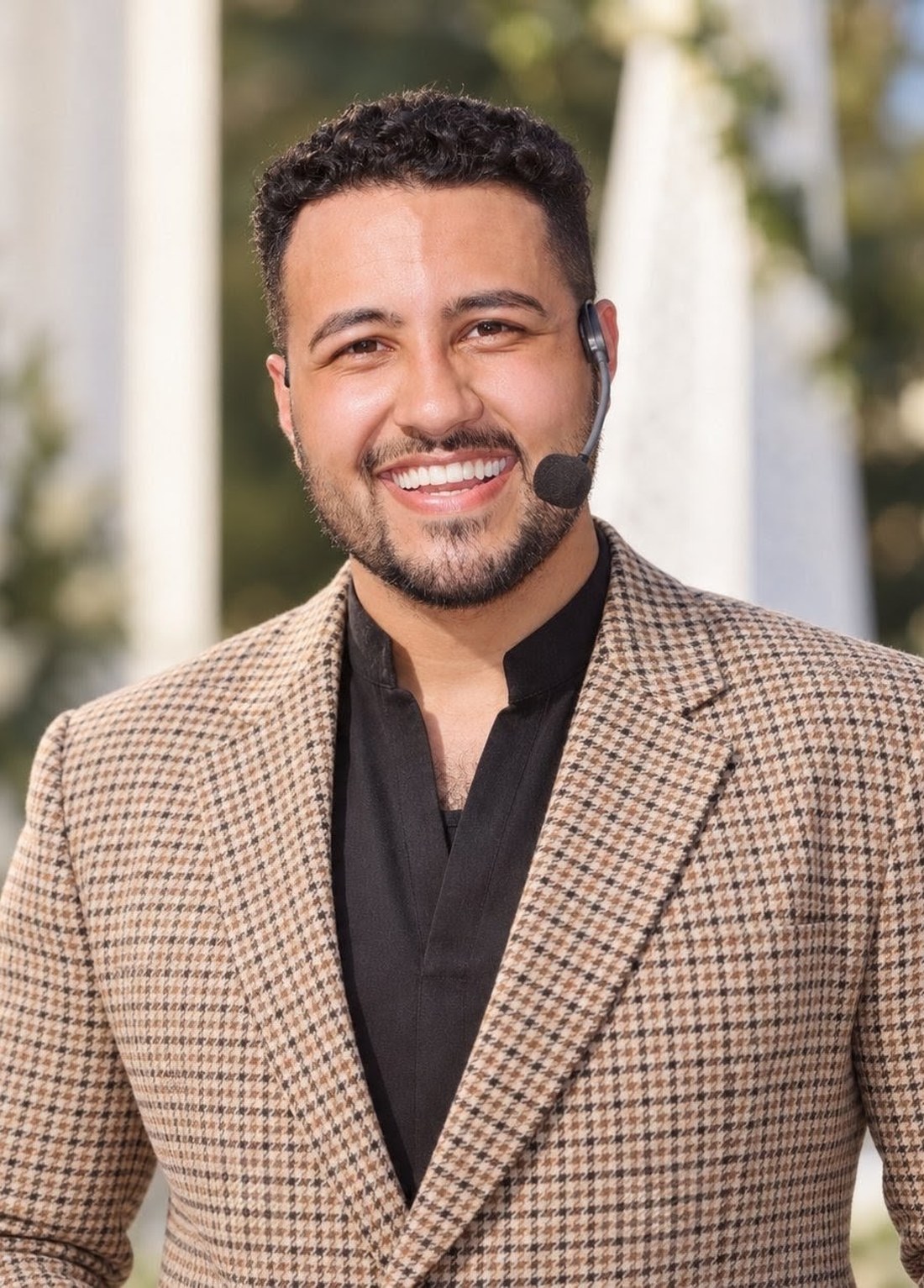
I run two lives that feed each other. From 9 to 5 I’m at Google, where I’m a Resident Brand Evangelist advising some of the world’s largest advertisers on how to bridge long-term brand narrative with full-funnel performance. From 5 to 9 I’m Chirag Speaks, The Brand Historian™: a keynote speaker, brand marketing researcher, and television commentator with an audience of 75,000+ and more than 35 million views across platforms (@chiragspeaks), known for studying 500 years of brand history, for appearing as a featured brand expert on HISTORY Channel’s The Mega Brands That Built America, and for the Brand Clarity Framework™. Google is in no way affiliated with my talks, and everything on this site is my own opinion.
The sentence I say most often: I spent the last decade of my life traveling the world to study History’s greatest brand stories & now I help you write the next. Good Brands Don’t Whisper™.
Where does the obsession come from?
I’m the son of Punjabi-Indian immigrants who owned retail clothing stores in New York City. My crib was in the back of the store. My first toy was my dad’s credit card machine, and I got my first sales quota as a small child: five dresses. I sold seven. Across the street was a Modell’s with a line out the door while we had to beg people into ours, and that gap is the whole obsession in one picture. Why do some businesses have people who crave them while the rest of us have transactions?
We were a small business family, and we didn’t have consultants, MBAs, or college programs to help us through the tough days. When foot traffic dropped we felt powerless over our own story, and sometimes we just hoped. So I started teaching myself the history and mechanics of brand storytelling, first coaching local nonprofits and small businesses, and eventually scaling those lessons to take brands from chaos to action.
I got to Lafayette College through the Posse Foundation and graduated with a B.A. in Economics and a certificate in Entrepreneurship. At Lafayette I was a Google BOLD intern, and my research on entrepreneurship and business education earned the Bradbury Dyer Innovator-in-Residence Fellowship, the Whitman Economics Scholar Fellowship, and the Hunsicker Business Studies Award. The turn in my own story happened there too, when a professor sat me down, asked “what’s your story?”, and refused my list of accolades as the answer. That question is why the method exists.
What do I do at Google?
Two things. On the operational side I came up through gTech, managing white-glove support and crisis management for Google’s top global advertisers and earning multiple customer-centricity awards along the way. On the evangelism side I’m a Resident Brand Evangelist (previously a Brand Strategy Fellow): when a large advertiser sees Google only as a bottom-of-funnel media vendor, I get brought in to custom-research and deliver executive keynotes and workshops on how brand narrative and performance marketing hold each other up in the AI era.
Inside Google I also serve as a recurring emcee for global summits, host Talks at Google conversations in New York with authors and cultural figures, mentor founders through the Google for Startups Accelerator, and run pro-bono career-narrative workshops, the personal version of my framework I call By My Pen™, teaching Googlers to own the story of their own work.
What is The Brand Historian™?
Rather than chasing social media hacks, I study 500 years of commercial and cultural history to find out why certain brand narratives survive technological revolutions, recessions, and generational shifts. A few of the stories I return to on stage:
- Michelin, 1900. With fewer than 3,000 cars in France, the Michelin brothers didn’t beg people to buy tires. They published the Michelin Guide to give drivers a reason to travel, and built demand for the whole category.
- Levi’s in the Depression. When the Gold Rush miner market saturated and the Depression hit, Levi’s moved its identity from utilitarian workwear to the romanticized American cowboy, and functional denim became a global cultural symbol.
- Virginia Slims and Tide. One bypassed product specs to tap directly into the 1960s women’s liberation identity (and I call that one manipulative in the same breath I tell it); the other evolved from stain removal to meeting families in their messy, everyday reality.
- Ally Bank’s 50/50 pledge. Ally pledged to split its sports advertising spend equally between men’s and women’s sports. I use that story to show how a value becomes a decision about where a brand spends its money. Read Ally’s announcement.
What do I keep saying on stage?
Across dozens of custom-researched keynotes and workshops, five ideas keep coming back:
- Narrative is Layer Zero in the AI era. As AI democratizes execution, the landscape gets exponentially noisier, and brand narrative becomes the foundational layer of meaning that makes all the downstream performance marketing and personalization actually convert.
- Escaping the performance doom loop. If you keep cutting the work that helps people know your brand, eventually there are fewer people looking for you. Then you spend more trying to win the same sale. I use this cycle to explain why brand-building and performance marketing need to support each other.
- From last-click utility to early-click identity. Competing purely on function (“compare mortgage rates”) traps a brand in a commodity price war. Identity- and empathy-driven narratives (“how to save your first $50k for a down payment”) capture intent 6 to 12 months earlier.
- Opening a second front door. Amazon went from online bookstore to AWS, Shopify from online cart to omnichannel point of sale, Intuit from seasonal TurboTax to year-round QuickBooks. Legacy brands earn permission to open a second front door for new audiences without alienating the core.
- The game of trust: stolen, borrowed, owned. Challenger brands play David against Goliath to steal trust from incumbents, and market leaders have to use their heritage and scale to own trust rather than fight on a disruptor’s turf.
What is the Brand Clarity Framework™?
Drawing on eight-plus years of advising over 300 businesses, Fortune 100 executives, and creators, I codified the research into a three-step method. The organizational version is the Brand Clarity Framework™; the personal version is By My Pen™ (your story will be written, but will it be by your pen?).
- Brand Echoes™. When customers, executives, or promotion committees talk about you behind closed doors they don’t recite a resume. They reduce you to five to seven words or impressions, your echoes. If you don’t engineer them on purpose, the market assigns them by default. Echoes travel four ways: experiential (Heinz reinforcing “slow, red, 57” with a 570-piece all-red puzzle and a website that took 57 minutes to load), visual (Tiffany blue, taxi yellow), feeling (Taco Bell’s Live Más), and word repetition (Brené Brown’s vulnerability, courage, empathy).
- The 8 Resonance Story Types. A business sells a commodity in a vacuum, like a paperclip company competing only on price. A brand is an identity people connect with. Eight repeatable story types (Origin, Values, Offering, Audience, Societal, Mythos, Future, Collab) package an organization’s origin, values, customer transformations, and proof into stories people retell.
- Brand Curiosity Theory. Most communication fails in one of two directions, under-sharing until you’re invisible or over-sharing until it feels like bragging. Curiosity Theory maps what to say across the stages of your audience’s curiosity, planting hooks that pull them from first glance to consideration, conversion, and advocacy.
Where have I been seen?
Television. Featured brand expert on HISTORY Channel’s The Mega-Brands That Built America and The Food That Built America. Find episodes, IMDb credits, and viewing options →
Stages. Keynotes across the US, Europe, the Middle East, and Asia, including NAB Show, Adobe’s Meet Magento, DigiMarCon, Google for Startups, The Flavor Experience, Revenue Marketing Alliance, NTCA, the Collegiate Entrepreneurs’ Organization, and the American Home Furnishings Alliance.
In front of brands including Google, Shopify, HubSpot, TurboTax, Infiniti, Armani, US Bank, Royal Bank of Canada, Coursera, Money Group, Care.com, and Intact Insurance.
Features and podcasts. HubSpot, Shopify, LinkedIn News, and podcasts including Creators Copilot, Product Powers, and Business RadioX.
Online. 75,000+ followers and 35M+ views across platforms, as @chiragspeaks and @entrekey.
Questions people ask
Is Chirag Speaks your real name?
Chirag is. Nijjer is my family name, and Chirag Speaks is the name I’m introduced by on stage and the name on everything I publish. The Brand Historian™ is what I do, and Good Brands Don’t Whisper™ is what I teach. EntreKey LLC is the company behind all of it.
What does a brand historian actually do?
I study how brands and institutions rose and fell over the last 500 years, pull out the pattern (the ones that survive change step back and ask what story they’re telling), and bring that pattern to a room as stories they can retell and small actions they can start the week they get home.
What do you speak about?
One flagship keynote, Good Brands Don’t Whisper, and two variations: The Fabric of Us for internal alignment and By My Pen for personal narrative. Every talk is tailored to the room, including a focus group with the event’s own attendees. Full detail is on the Speaking page.
Do you talk about AI?
Constantly, because it’s the reason the noise is about to get worse. The issue was never change; we’ve survived change before. The issue is noise, and the only way through it is a story simple enough to be retold.
Where are you based, and do you travel?
New York City, and yes, anywhere. Virtual sessions, workshops, panels, emcee work, and multi-event tours are all on the table.
How do I book you?
Request the speaker packet, or email Chirag@ChiragSpeaks.com. You’ll get a 30-minute fit call and a quote in writing within 5 days.
Bios you can copy
In one sentence
Chirag Nijjer, known as Chirag Speaks and The Brand Historian™, is a keynote speaker, emcee, and creator of Good Brands Don’t Whisper who uses brand history to help audiences tell their own stories.
50 words
Chirag Nijjer, known as Chirag Speaks, is The Brand Historian™. A keynote speaker and emcee, he uses 500 years of brand history to help audiences tell their own stories. He created the Brand Clarity Framework™ and appears as a brand expert on HISTORY Channel’s The Mega Brands That Built America.
100 words
Chirag Nijjer, known as Chirag Speaks, is The Brand Historian™. A keynote speaker and emcee, he uses 500 years of brand history to help audiences tell their own stories. He created the Brand Clarity Framework™ and appears as a brand expert on HISTORY Channel’s The Mega Brands That Built America. He has spoken for Google, Shopify, HubSpot, NTCA, AHFA, and Adobe’s Meet Magento. His work begins with the industry’s history and conversations with attendees, so each talk reflects the room. He is also a Resident Brand Evangelist at Google. His independent speaking work is separate from his role at Google.
On-stage introduction
Chirag Speaks is The Brand Historian. He studies the rise and fall of brands and appears as a featured brand expert on HISTORY Channel’s The Mega Brands That Built America. Today, he’s here to help us find the stories we want people to remember and retell. Please welcome Chirag Speaks.
On stage, introduce him as Chirag Speaks. In print, Chirag Nijjer (Chirag Speaks) on first mention is fine. For television credits, use featured brand expert on HISTORY Channel’s The Mega Brands That Built America. You can download a publicity photo, or email me for other event assets.